

Analytics and Reporting
Analytics and Reporting: 11 Complete Guide to Data‑Driven Business Growth
1. Introduction to Analytics and Reporting
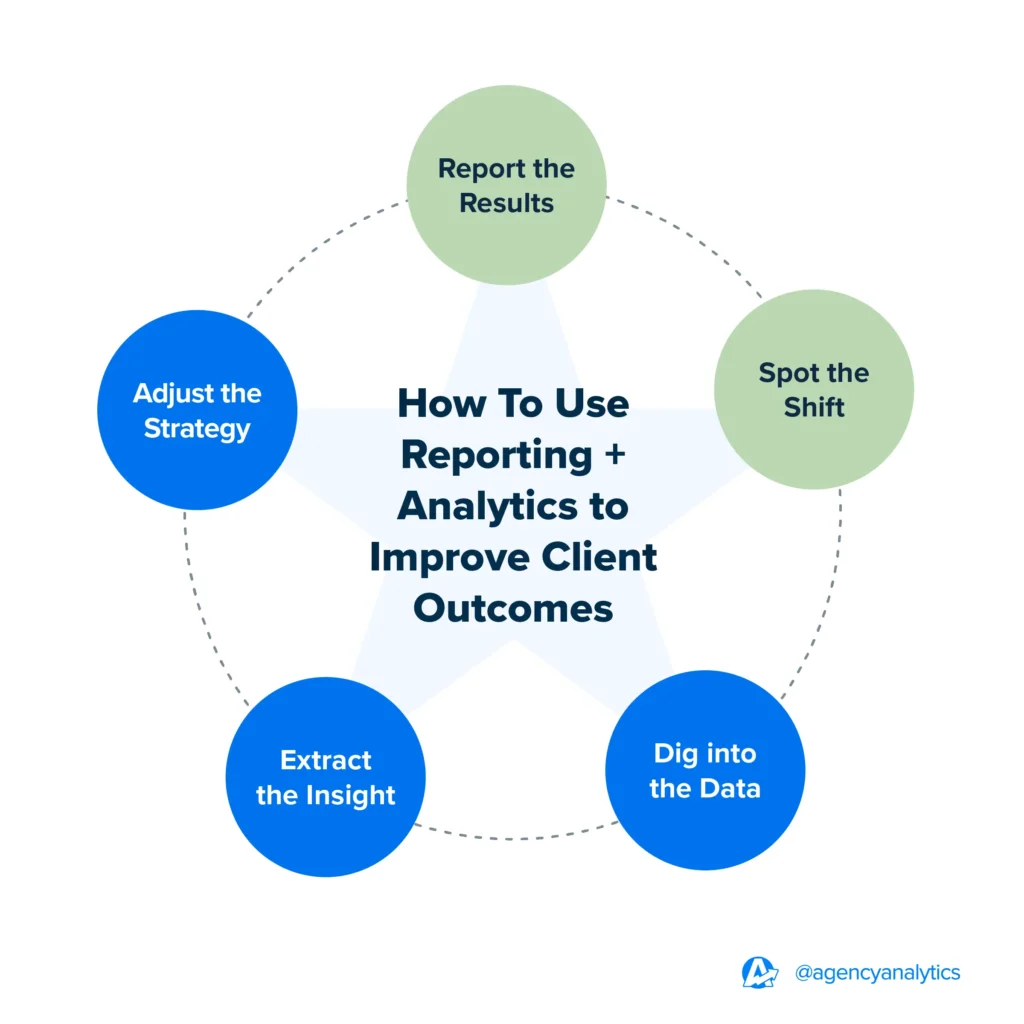
Analytics and Reporting play a critical role in modern business growth and decision-making. In today’s digital world, businesses generate massive amounts of data from websites, marketing campaigns, sales systems, and customer interactions. Analytics and Reporting help organizations collect, measure, analyze, and interpret this data in a meaningful way.
With effective Analytics and Reporting, businesses can clearly understand what is working, what is not, and where improvements are needed. Instead of making decisions based on assumptions or guesswork, companies rely on Analytics and Reporting to track performance, identify trends, and measure success using real-time and historical data.
Analytics and Reporting also help businesses optimize strategies, improve operational efficiency, and increase profitability. From monitoring website traffic and customer behavior to evaluating marketing ROI and sales performance, Analytics and Reporting provide valuable insights that support smarter planning and long-term growth. In short, Analytics and Reporting turn raw data into actionable insights that help businesses stay competitive and make informed decisions with confidence.
2. What is Analytics?
Analytics is the process of examining, interpreting, and analyzing data to discover meaningful patterns, trends, and insights. In the context of business, Analytics helps organizations understand how data behaves and what it reveals about performance, customers, and operations. Analytics focuses on answering important questions such as why something happened, how it happened, and what is likely to happen next.
Analytics plays a major role within Analytics and Reporting because it goes beyond simple numbers and reports. While reporting shows data, Analytics explains the story behind that data. By using Analytics, businesses can identify problems, uncover opportunities, and make smarter decisions based on evidence rather than assumptions.
With strong Analytics practices, companies can predict outcomes, improve strategies, and optimize overall performance. For example, Analytics can help businesses understand customer behavior, forecast sales trends, measure marketing effectiveness, and identify areas for improvement. When combined with Analytics and Reporting, organizations gain a clear and complete view of their data, allowing them to plan better, reduce risks, and achieve long-term growth.
In today’s data-driven world, Analytics is an essential part of Analytics and Reporting. It transforms raw data into valuable insights that guide decision-making, improve efficiency, and support sustainable business success.
3. What is Reporting?
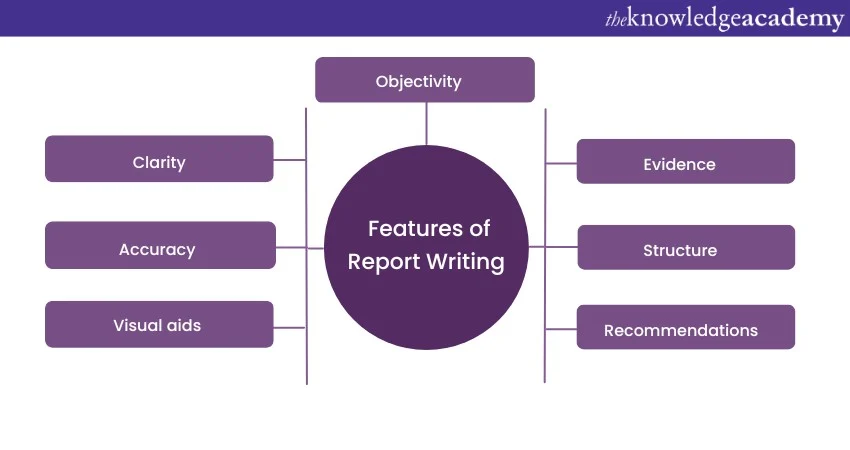
Reporting is the process of collecting, organizing, and presenting data in a structured and easy-to-understand format such as dashboards, charts, tables, and written reports. In Analytics and Reporting, reporting focuses on clearly showing what happened over a specific period of time using accurate numbers and visual representations.
Reporting plays a key role in Analytics and Reporting because it provides a clear snapshot of business performance. Through regular reporting, businesses can track important metrics like sales, website traffic, conversions, customer engagement, and revenue growth. These reports help teams monitor progress, compare results, and ensure that goals and KPIs are being met.
Unlike analytics, reporting does not explain why something happened; instead, it summarizes past data in a simple and structured way. However, reporting is the foundation of Analytics and Reporting, as analytics relies on reported data to generate deeper insights. Without proper reporting, analytics cannot deliver accurate or meaningful results.
In business operations, marketing, finance, and management, reporting helps decision-makers stay informed and aligned. When combined with Analytics and Reporting tools, reporting ensures transparency, improves accountability, and supports better planning by turning raw data into clear, readable performance summaries.
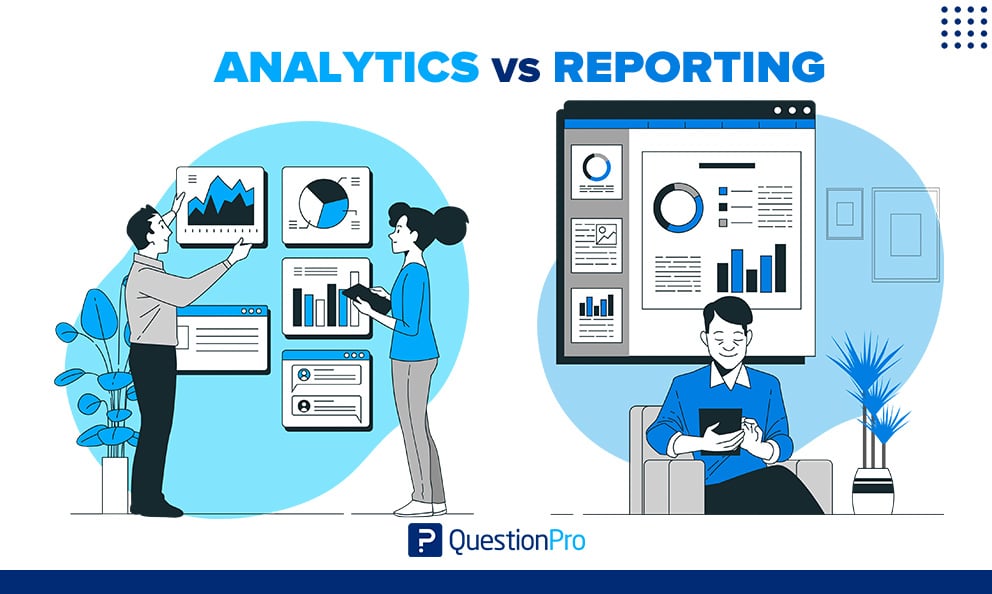
4. Difference Between Analytics and Reporting
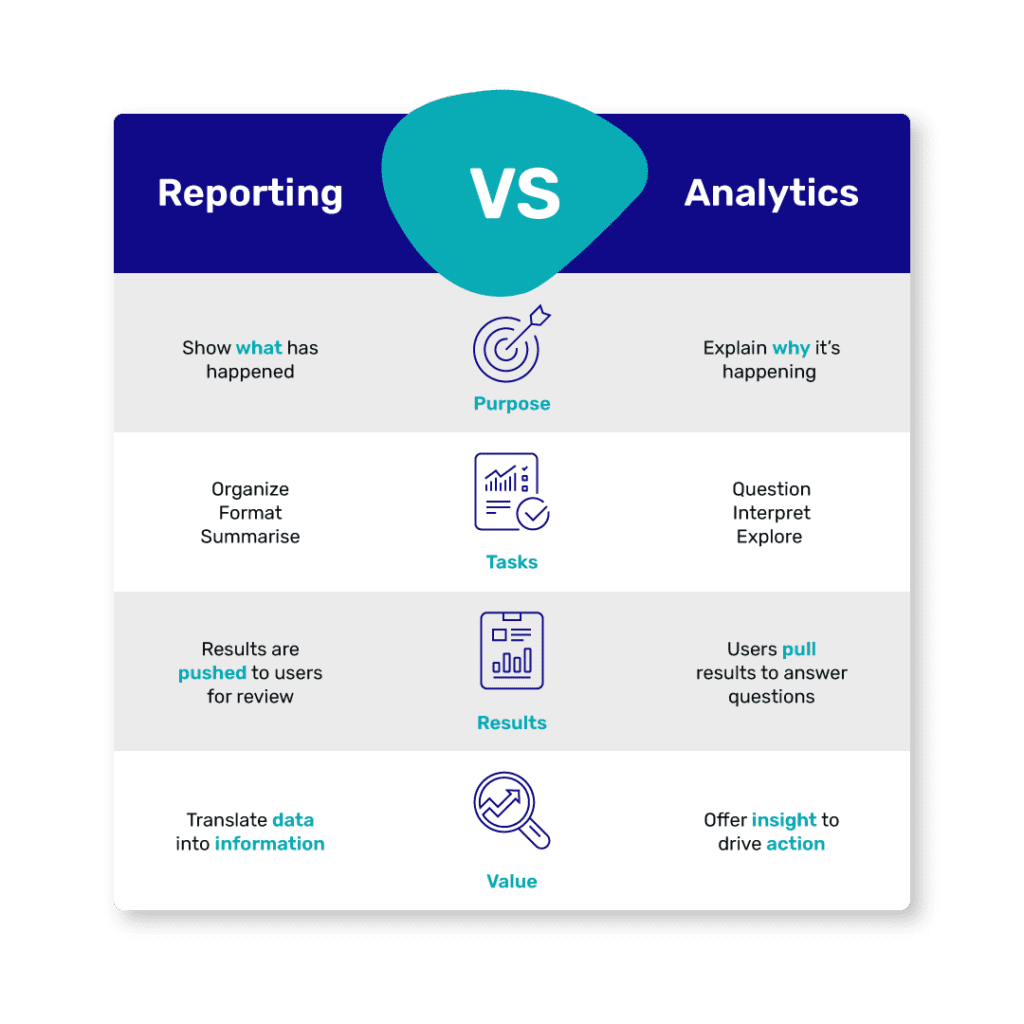
| Analytics | Reporting |
|---|---|
| Focuses on insights and predictions | Focuses on data presentation |
| Explains why something happened | Shows what happened |
| Supports decision-making | Supports monitoring |
5. Why Analytics and Reporting Are Important for Business
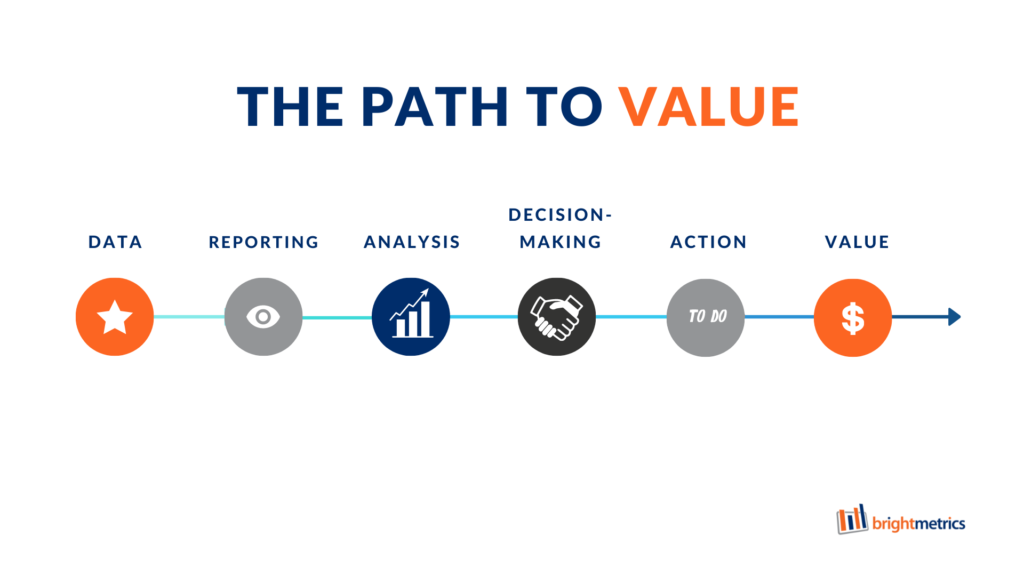
Analytics and Reporting are essential for businesses that want to grow, compete, and make smart decisions in a data-driven world. By using Analytics and Reporting, organizations can clearly understand performance, customer behavior, and market trends instead of relying on guesswork or assumptions.
One of the biggest advantages of Analytics and Reporting is data-driven decision-making. Businesses can analyze real data to understand what strategies are working and which ones need improvement. This reduces risks and helps leaders make confident decisions based on facts.
Analytics and Reporting also help businesses identify strengths and weaknesses. By tracking performance metrics, companies can discover strong areas that need scaling and weak areas that require improvement. This insight allows better planning and efficient use of resources.
Another key benefit of Analytics and Reporting is improving customer experience. By analyzing customer data, behavior, and feedback, businesses can personalize services, improve engagement, and deliver better value to their audience.
Analytics and Reporting play a major role in increasing ROI. Businesses can track marketing campaigns, sales efforts, and operational costs to understand what delivers the best results. This helps optimize budgets and maximize returns.
Additionally, Analytics and Reporting help track goals and KPIs accurately. Regular reporting and analysis ensure that teams stay aligned with business objectives and measure progress effectively.
Without proper Analytics and Reporting, businesses risk making decisions based on assumptions instead of facts, which can lead to poor performance and missed growth opportunities.
6. Types of Analytics
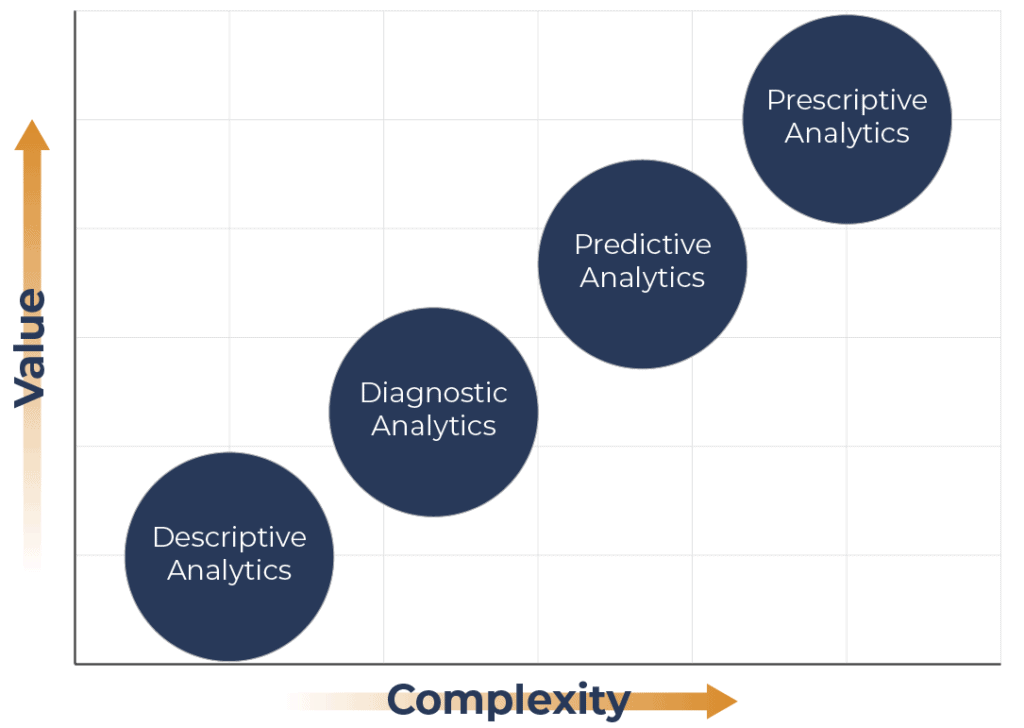
Descriptive Analytics
Explains past performance using historical data, such as website traffic or sales reports.
Diagnostic Analytics
Helps understand why something happened by analyzing trends and patterns.
Predictive Analytics
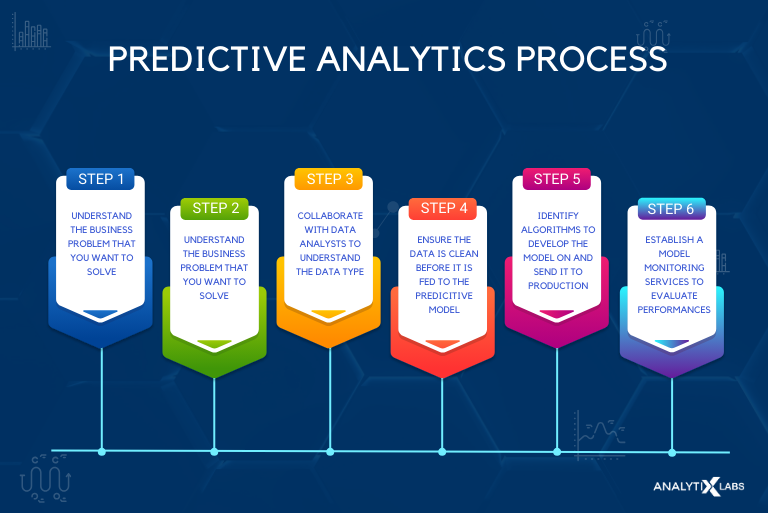
Uses data and algorithms to predict future outcomes, like customer behavior or sales trends.
Prescriptive Analytics
Suggests actions to take based on data insights and predictions.
7. Key Benefits of Analytics and Reporting
Analytics and Reporting offer multiple benefits that help businesses grow smarter and faster. By using Analytics and Reporting effectively, organizations can transform raw data into meaningful insights that support strategic planning and daily operations.
One of the biggest benefits of Analytics and Reporting is better decision-making. When decisions are based on accurate data and insights, businesses can choose the right strategies with confidence instead of relying on assumptions.
Analytics and Reporting also lead to improved efficiency. By analyzing workflows, performance metrics, and resource usage, businesses can identify inefficiencies and optimize processes to save time and costs.
Higher customer satisfaction is another major advantage of Analytics and Reporting. By understanding customer behavior, preferences, and feedback, businesses can personalize experiences, improve services, and build stronger customer relationships.
Accurate performance tracking is made possible through Analytics and Reporting. Businesses can monitor KPIs, measure progress toward goals, and evaluate the success of marketing campaigns, sales efforts, and operational activities.
Analytics and Reporting also help reduce business risks. By identifying trends, predicting outcomes, and spotting potential issues early, organizations can take proactive actions and avoid costly mistakes.
Overall, Analytics and Reporting turn raw data into valuable business insights that drive growth, improve performance, and create long-term competitive advantages.
8. Analytics and Reporting Tools
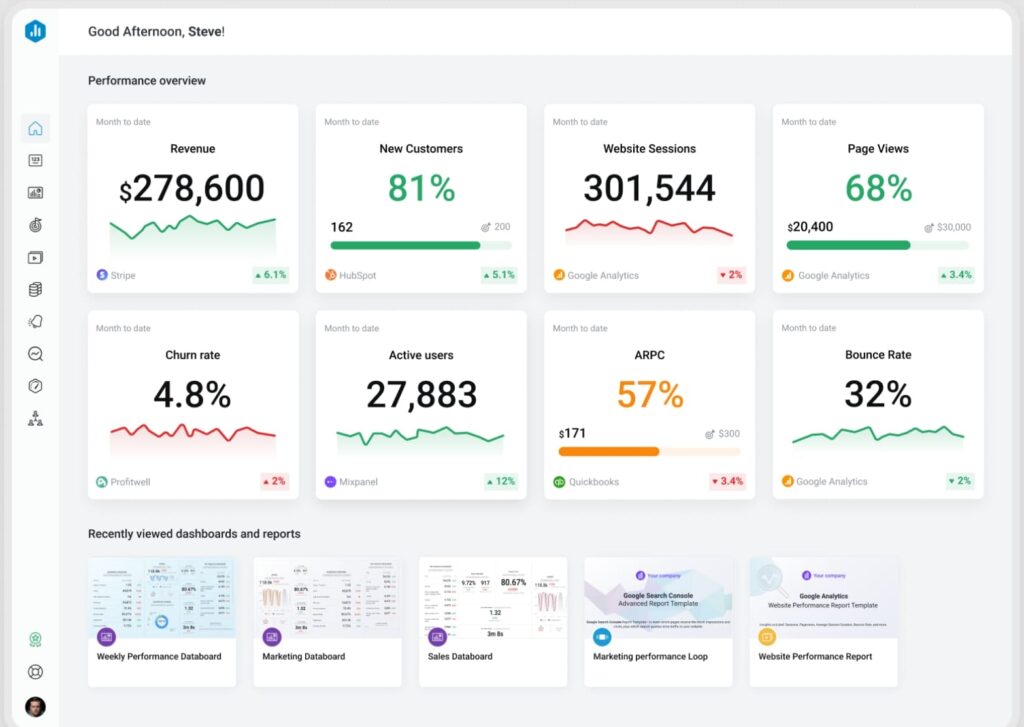
Some popular analytics and reporting tools include:
- Google Analytics
- Google Looker Studio
- Power BI
- Tableau
- HubSpot Analytics
These tools help visualize data and generate meaningful reports.
9. How Analytics and Reporting Improve Marketing Performance
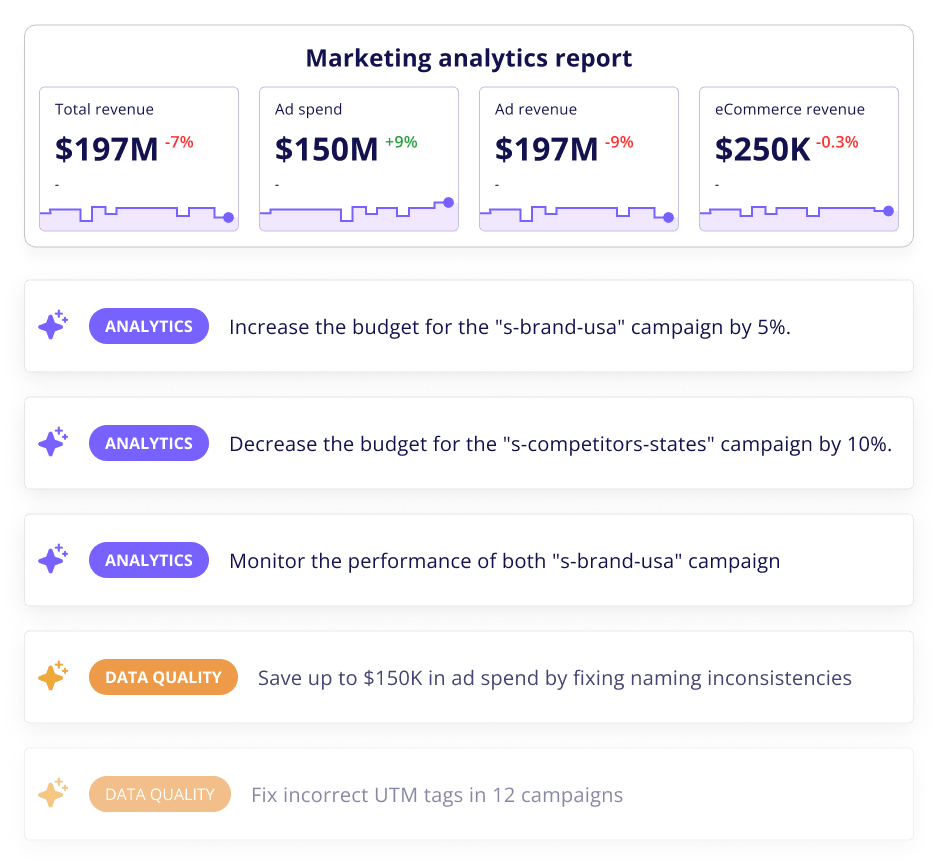
Analytics and Reporting play a vital role in improving marketing performance by helping marketers measure, analyze, and optimize every campaign. With the help of Analytics and Reporting, marketers can clearly track how users interact with ads, websites, social media, and content across different platforms.
One of the key ways Analytics and Reporting improve marketing performance is by tracking campaign effectiveness. Marketers can analyze metrics such as website traffic, click-through rates, conversions, and engagement to understand which campaigns are performing well and which need improvement.
Analytics and Reporting also help marketers understand audience behavior. By analyzing user demographics, interests, devices, and browsing patterns, businesses can create more targeted and personalized marketing strategies that connect better with their audience.
Another major benefit of Analytics and Reporting is ad optimization. Marketers can monitor ad performance in real time, identify high-performing ads, pause low-performing ones, and adjust budgets for better ROI. This ensures that marketing spend is used efficiently.
Analytics and Reporting also support content and SEO strategies. By analyzing content performance, keyword rankings, and user engagement
10 Future of Analytics and Reporting
The future of Analytics and Reporting is evolving rapidly with the integration of advanced technologies such as AI and Automation, predictive modeling, and real-time data analysis. These innovations are revolutionizing how businesses collect, analyze, interpret, and use data, enabling smarter and faster decision-making across all levels of an organization. In a world driven by data, strong Analytics and Reporting practices are becoming more critical than ever for staying competitive and achieving sustainable growth.
AI and Automation: Artificial intelligence (AI) and automation are transforming Analytics and Reporting by making data processing faster, more accurate, and highly scalable. Businesses can automate the collection, cleaning, and analysis of data, allowing them to generate actionable insights without relying solely on manual work. AI-powered Analytics and Reporting can detect patterns, predict trends, and provide recommendations, empowering companies to make more informed decisions in less time. With AI and Automation, businesses can focus on strategy and innovation while relying on precise Analytics and Reporting for day-to-day performance monitoring.
Predictive Modeling: Predictive modeling is a cornerstone of modern Analytics and Reporting. By leveraging historical data, machine learning algorithms, and statistical models, predictive analytics forecasts future outcomes, including customer behavior, sales trends, and market changes. Integrating predictive modeling into Analytics and Reporting allows businesses to plan proactively, identify growth opportunities, mitigate risks, and improve overall operational efficiency. Companies can now anticipate challenges before they occur and optimize strategies to achieve better results.
Real-Time Data Analysis: Real-time data analysis is another key advancement shaping the future of Analytics and Reporting. Businesses can monitor performance as it happens, respond immediately to market shifts, optimize campaigns on the fly, and deliver timely insights to stakeholders. Real-time Analytics and Reporting enhances agility, allowing organizations to act quickly, seize opportunities, and address issues before they escalate. This dynamic capability is increasingly vital for businesses operating in fast-paced, competitive industries.
By leveraging AI, predictive modeling, and real-time analysis within Analytics and Reporting, businesses can transform raw data into actionable insights, drive informed decision-making, improve operational efficiency, and maintain a competitive edge. The future of Analytics and Reporting is not just about observing past performance—it is about anticipating trends, making proactive decisions, and shaping the path to sustainable business growth.
11. Common Mistakes to Avoid in Analytics and Reporting
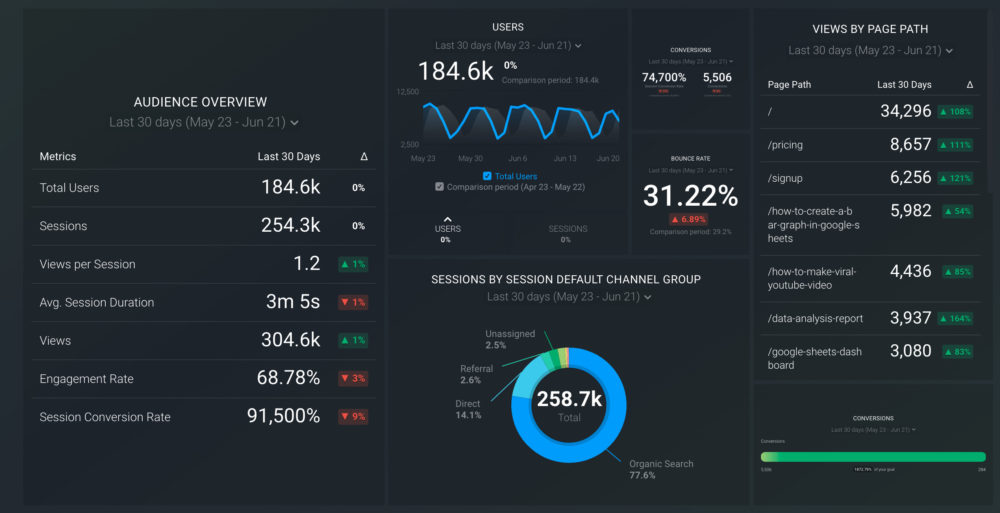
While Analytics and Reporting provide powerful insights for businesses, many organizations make mistakes that reduce their effectiveness. Avoiding these common pitfalls ensures that Analytics and Reporting deliver accurate, actionable, and reliable insights for decision-making.
1. Tracking Too Many Metrics: One of the biggest mistakes in Analytics and Reporting is trying to track every possible metric. Focusing on too many data points can overwhelm teams and dilute insights. Instead, businesses should identify the most important metrics that align with their goals and KPIs, ensuring Analytics and Reporting remain actionable and clear.
2. Ignoring Data Accuracy and Quality: Poor-quality or inaccurate data can lead to misleading conclusions in Analytics and Reporting. Businesses must ensure that data is clean, complete, and reliable. Regular audits, validation, and cleaning of data improve the credibility and usefulness of Analytics and Reporting.
3. Not Acting on Insights: A common mistake is collecting data and generating reports without taking action. Analytics and Reporting are only valuable when insights are used to make informed decisions. Businesses should have processes in place to implement changes based on the findings from Analytics and Reporting.
4. Using Unclear or Overcomplicated Reports: Reports that are cluttered or difficult to understand can hinder decision-making. Effective Analytics and Reporting should present data clearly, using dashboards, visualizations, and summaries that make insights easy to interpret for all stakeholders.
5. Focusing Only on Historical Data: While reporting past performance is important, relying solely on historical data limits the predictive power of Analytics and Reporting. Businesses should incorporate predictive analytics, trends, and forward-looking insights to make proactive decisions and future-proof strategies.
6. Neglecting Regular Reviews: Some businesses generate Analytics and Reporting reports but fail to review them consistently. Regular review and monitoring of reports ensure that decisions are timely, trends are recognized early, and strategies are continually optimized.
7. Ignoring Context and Business Goals: Data without context can be misleading. Analytics and Reporting should always be aligned with business objectives, KPIs, and industry benchmarks. Understanding the context ensures that insights are meaningful and support strategic decision-making.
8. Relying on a Single Tool or Source: Using only one tool or data source can limit the depth and accuracy of Analytics and Reporting. Combining multiple data sources and tools provides a more comprehensive view of performance and strengthens decision-making.
By avoiding these mistakes, businesses can maximize the effectiveness of Analytics and Reporting, transforming raw data into actionable insights, improving operational efficiency, and driving sustainable growth.
12. Conclusion
Analytics and Reporting are essential tools for modern businesses that want to grow with clarity, confidence, and consistency. In today’s competitive digital environment, businesses generate large volumes of data every day, but without proper Analytics and Reporting, this data has little value. By using Analytics and Reporting effectively, organizations can understand overall performance, analyze customer behavior, and measure results with accuracy.
Analytics and Reporting enable businesses to move away from assumptions and make truly data-driven decisions. Analytics helps uncover insights, trends, and opportunities, while reporting provides clear visibility into past and current performance. Together, Analytics and Reporting allow businesses to improve efficiency, optimize marketing strategies, and increase profitability.
By combining analytics for deeper insights and reporting for performance tracking, companies can identify what works, fix what doesn’t, and plan smarter for the future. Analytics and Reporting also help improve customer experience by understanding user needs, preferences, and engagement patterns. In addition, they play a key role in reducing business risks by highlighting issues early and supporting informed decision-making.
In a data-driven world, strong Analytics and Reporting systems are the foundation of smart planning, sustainable growth, and long-term success. Businesses that invest in Analytics and Reporting gain a competitive advantage and are better prepared to scale and adapt. For expert support and advanced data-driven strategies, kbdigitalfly.com helps businesses turn Analytics and Reporting into powerful growth engines.
13. FAQs
1. What is Analytics and Reporting? Analytics and Reporting is the process of collecting, analyzing, and presenting data to understand business performance and make data-driven decisions.
2. Why are Analytics and Reporting important for businesses? Analytics and Reporting help businesses track performance, improve strategies, and grow using real data instead of assumptions.
3. What is the difference between analytics and reporting? Reporting shows what happened, while analytics explains why it happened and predicts future outcomes.
4. How do Analytics and Reporting improve decision-making? They provide clear insights and accurate data that support confident, informed business decisions.
5. How do Analytics and Reporting help marketing performance? Analytics and Reporting track campaigns, measure engagement, optimize ads, and increase ROI.
6. Can small businesses use Analytics and Reporting? Yes, Analytics and Reporting are useful for small businesses to track growth and improve performance.
7. What data is used in Analytics and Reporting? Data can include website traffic, sales, customer behavior, conversions, and engagement metrics.
8. Which tools are best for Analytics and Reporting? Popular Analytics and Reporting tools include Google Analytics, Looker Studio, Power BI, Tableau, and HubSpot.
9. How often should Analytics and Reporting be reviewed? Analytics and Reporting should be reviewed weekly or monthly to track progress and make improvements.
10. What are KPIs in Analytics and Reporting? KPIs are key performance indicators used in Analytics and Reporting to measure business success.
11. How do Analytics and Reporting improve customer experience? They help understand customer behavior and preferences, allowing better personalization.
12. Are Analytics and Reporting useful for SEO? Yes, Analytics and Reporting help track keyword performance, traffic, and user behavior for SEO improvement.
13. What is real-time Analytics and Reporting? Real-time Analytics and Reporting show live data to monitor performance instantly.
14. How do Analytics and Reporting reduce business risks? They identify trends and issues early, helping businesses take preventive action.
15. What is predictive analytics in Analytics and Reporting? Predictive analytics uses data to forecast future trends and outcomes.
16. Do Analytics and Reporting require technical skills? Basic Analytics and Reporting can be used by anyone, while advanced analytics may require expertise.
17. How do Analytics and Reporting help sales teams? They track sales performance, identify opportunities, and improve conversion rates.
18. Can Analytics and Reporting be automated? Yes, many Analytics and Reporting tools offer automated dashboards and reports.
19. What industries use Analytics and Reporting? Analytics and Reporting are used in marketing, e-commerce, finance, healthcare, education, and more.
20. How do Analytics and Reporting support long-term growth? They provide insights for smarter planning, better strategies, and sustainable business growth.
Leave a comment