

E-Commerce
E-Commerce: 10 Complete Guide to Online Business Success
1. Introduction to E-Commerce
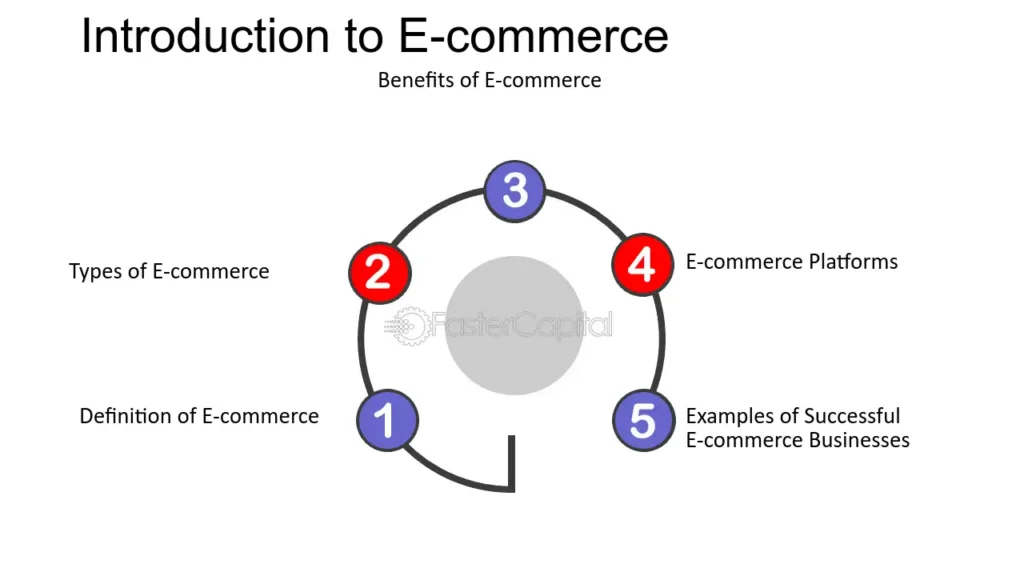
E-commerce is the digital method of buying and selling products or services using the internet. In simple words, E-commerce allows businesses to showcase their products online, accept orders, receive secure payments, and deliver items directly to customers—without the limitations of a physical store. In today’s fast and competitive digital era, E-commerce has evolved into the backbone of modern business growth.
With the rising use of smartphones, online payments, and fast delivery systems, E-commerce has completely changed how people shop and how businesses operate. Customers now prefer convenience, speed, and variety—three major advantages that E-commerce provides effortlessly. Whether a small startup or a global brand, every business uses E-commerce to reach more customers, boost sales, and build a strong online presence.
E-commerce also allows businesses to operate 24/7, giving customers the freedom to shop anytime, from anywhere in the world. This flexibility makes E-commerce one of the most powerful tools for business expansion in 2025. With digital technology advancing rapidly, E-commerce continues to grow, offering endless opportunities for businesses to scale faster, reduce costs, and serve customers better than ever before.
2. Why E-Commerce Is Important in 2025
In 2025, E-commerce is not just a business trend—it has become a necessity for every brand that wants to survive and grow in the digital world. With rapid technological advancements, changing customer behavior, and a shift toward online convenience, businesses are adopting E-commerce at a record pace. Today’s customers expect fast delivery, easy payment options, and a smooth shopping experience, and E-commerce fulfills all these expectations more efficiently than traditional stores.
The rise of smartphones and affordable internet has made E-commerce accessible to millions of new users. Customers now browse, compare, and buy products instantly from their mobile devices. Secure payment systems, cashless transactions, and one-click checkout have made online shopping safe, quick, and reliable. This convenience has increased customer trust in E-commerce, leading to massive growth in online sales across all industries.
For businesses, E-commerce opens the door to unlimited opportunities. Instead of selling only in one city or region, companies can now reach customers globally. With lower operational costs, automated systems, and data-driven insights, E-commerce helps brands scale quickly and profitably. It allows businesses to analyze customer behavior, personalize offers, and improve conversions—something that physical stores can’t match.
In 2025, the companies that embrace E-commerce will grow faster, build stronger customer relationships, and stay ahead of competitors. This makes E-commerce one of the most powerful and essential tools for business success in the modern digital economy.
3. How E-Commerce Works
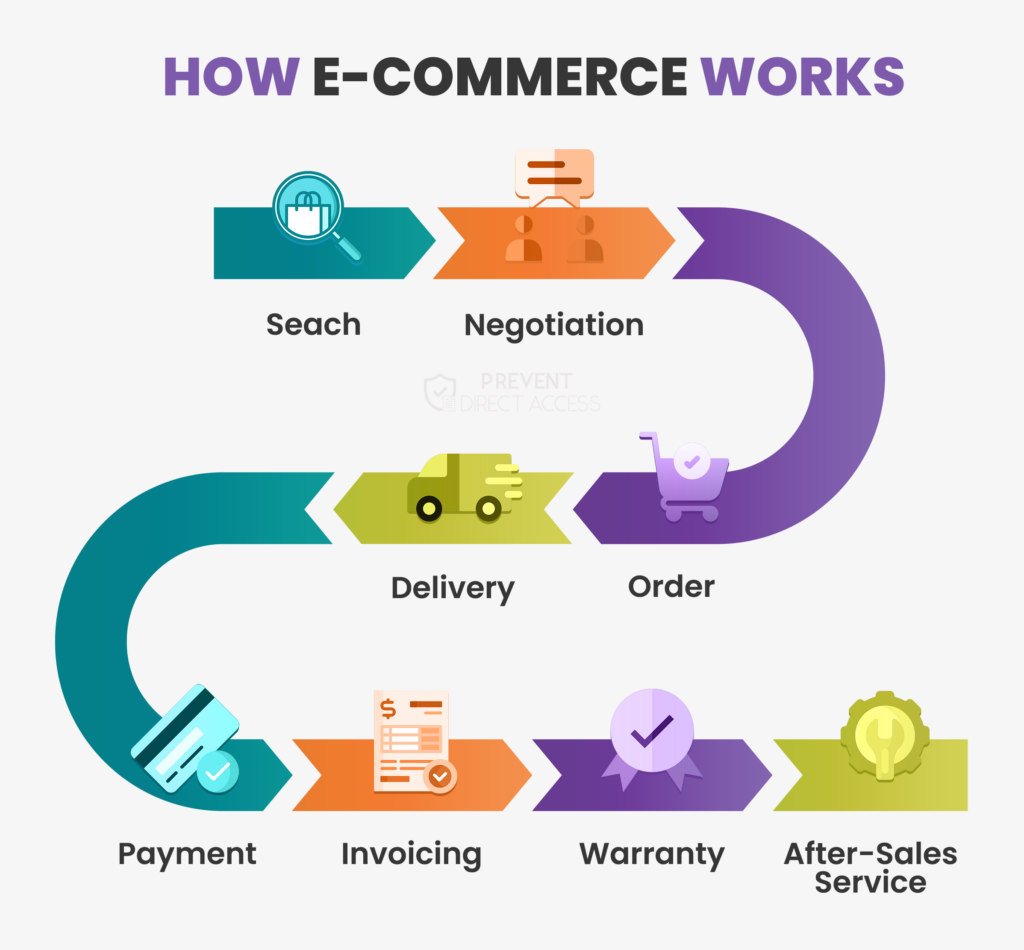
E-commerce works through a simple but powerful digital process that allows businesses to sell products or services online. The entire buying and selling journey happens on an E-commerce website or mobile app, where customers can easily browse categories, view product details, compare prices, and choose the items they want. This smooth online experience is one of the main reasons E-commerce has become the preferred shopping method in 2025.
The E-commerce process begins when a business uploads product listings on its platform. Each listing includes images, descriptions, prices, reviews, and specifications to help customers make better decisions. When a user likes a product, they add it to their shopping cart and proceed to checkout. This is where E-commerce uses advanced, secure payment gateways that support multiple payment options like UPI, credit/debit cards, net banking, and wallets. These systems ensure safe, encrypted transactions, increasing trust in online buying.
Once the payment is completed, the E-commerce platform automatically sends the order details to the business or warehouse. Inventory management software checks stock availability, updates product quantities, and triggers the packaging process. Logistics partners are then assigned to pick up and deliver the order to the customer’s address. Throughout this process, E-commerce systems provide real-time tracking so customers know exactly where their order is at every step.
From product discovery to order delivery, everything in E-commerce is automated and efficient. This automation reduces errors, saves time, and ensures a fast and convenient shopping experience. By combining digital storefronts, secure payments, smart logistics, and powerful backend software, E-commerce creates a seamless journey for both businesses and customers.
4. Key Benefits of E-Commerce
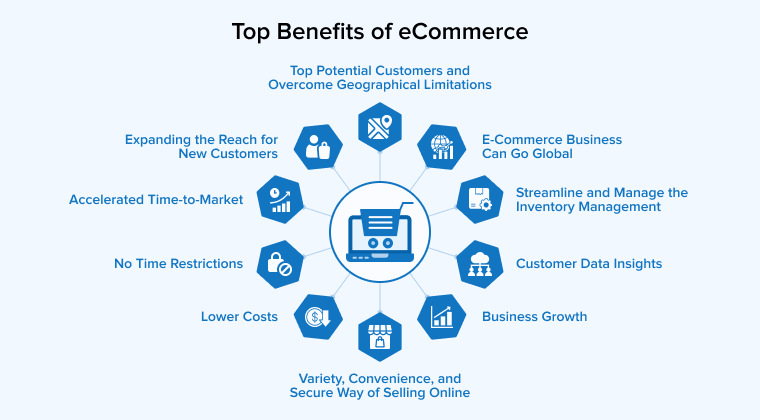
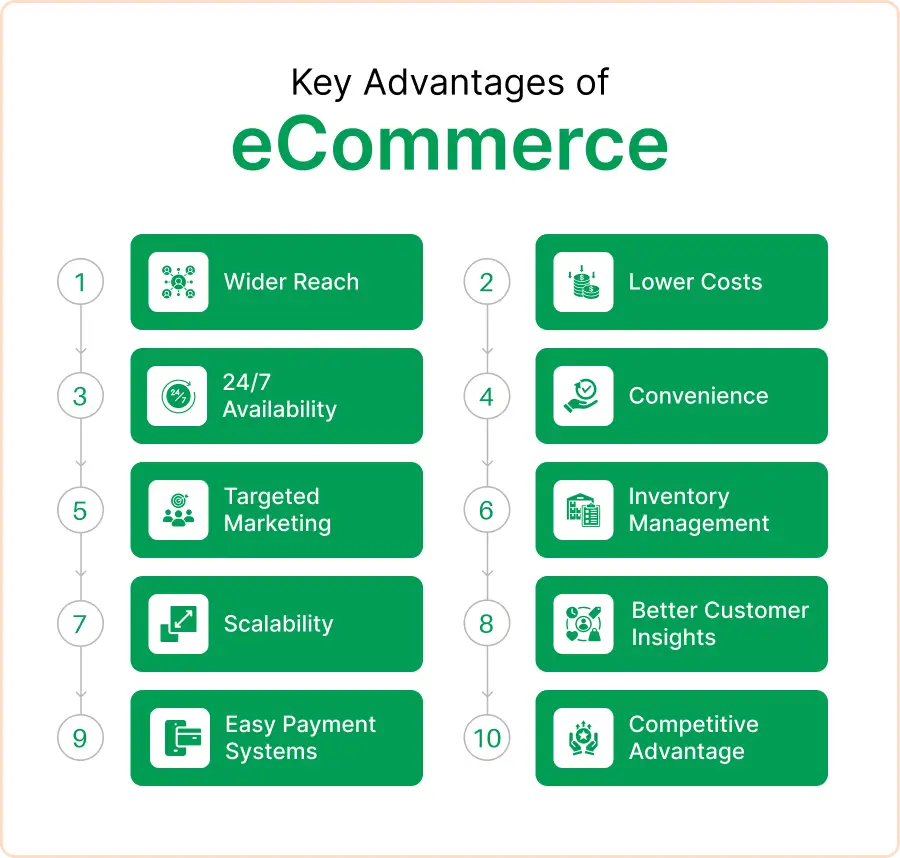
E-commerce offers several powerful advantages that make it one of the most effective business models in 2025. Whether you’re running a small startup or a large enterprise, E-commerce helps you operate smarter, reach more customers, and increase profits with less effort. Here are the major benefits of E-commerce explained in detail:
1. 24/7 Availability
One of the biggest benefits of E-commerce is that your online store is open 24/7. This means customers can shop anytime—early morning, late night, weekends, or holidays. Unlike physical stores, E-commerce removes time limitations and gives customers complete flexibility.
2. Lower Operational Costs
Running an E-commerce business requires far less investment compared to a traditional store. There is no need for expensive rent, extra staff, or large inventories. Automation, digital catalogs, and online tools reduce costs significantly, making E-commerce a highly profitable model.
3. Global Customer Reach
With E-commerce, your business is not restricted to one location. You can sell to customers in different cities, states, or even countries. This global reach helps small businesses compete with bigger brands and expand their audience effortlessly.
4. Faster Buying Process
Customers can quickly find their desired products, compare options, and place orders within minutes. E-commerce platforms offer filters, search bars, and personalized recommendations, making the buying process smooth and fast.
5. Easy Marketing & Analytics
E-commerce gives access to powerful marketing tools like SEO, social media ads, Google Ads, and email campaigns. You can track user behavior, analyze data, and optimize your marketing strategy. These insights help understand customer preferences and improve sales performance.
6. Better Customer Experience
With product reviews, high-quality images, detailed descriptions, and fast delivery services, E-commerce offers a superior customer experience. Many platforms also provide instant support through chatbots and help centers.
7. Scalability & Automation
As your business grows, E-commerce platforms can easily scale without major upgrades. Automated systems handle inventory, payments, tracking, and customer communication, making the entire process smooth and efficient.
8. Improved Efficiency & Accuracy
From order processing to delivery, E-commerce uses advanced technology to reduce errors and improve accuracy. This efficiency helps businesses deliver products faster and build customer trust.
Overall, E-commerce provides convenience, reach, speed, and cost efficiency—making it the most powerful business model in the digital age.
5. Types of E-Commerce Businesses
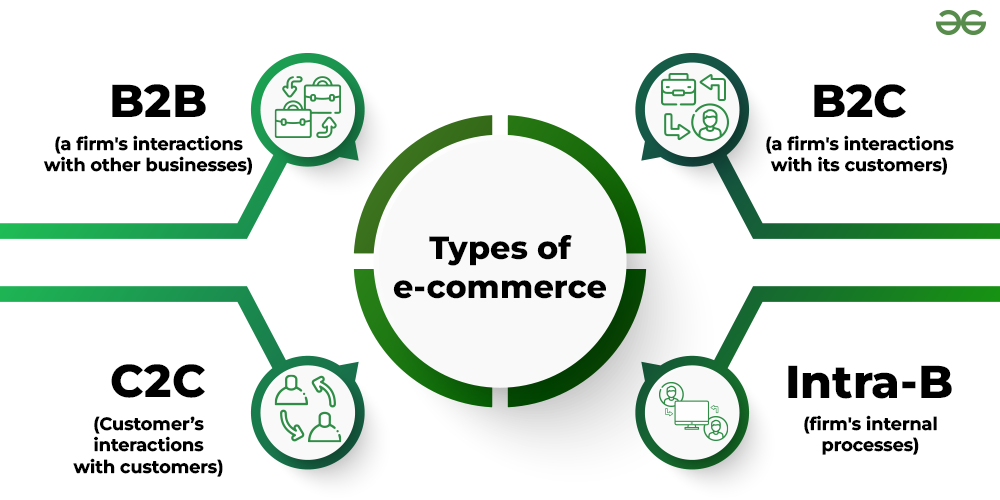
In the modern digital world, E-commerce has grown into a powerful business model with multiple categories. Each type of E-commerce business serves a different purpose and audience, making it easier for companies to choose the model that fits their goals. Understanding these types is important for anyone planning to start or grow an E-commerce business in 2025. Below are the major types of E-commerce explained in detail:
1. B2C (Business to Consumer)
The B2C E-commerce model is the most popular. In this type, businesses sell products directly to consumers through online stores. Examples include clothing stores, electronics websites, grocery apps, and beauty product platforms. B2C E-commerce focuses on fast delivery, easy checkout, and smooth user experience.
2. B2B (Business to Business)
In B2B E-commerce, companies sell products or services to other businesses. This includes wholesale suppliers, software companies, and industrial product sellers. B2B E-commerce involves bulk orders, repeat purchases, and long-term business relationships. It is growing rapidly as more companies shift to digital buying.
3. C2C (Consumer to Consumer)
C2C E-commerce allows users to sell products to other consumers. Platforms like marketplace apps, reselling websites, and auction platforms fall under this category. It helps individuals sell used, handmade, or collectible items directly to buyers.
4. C2B (Consumer to Business)
In the C2B E-commerce model, individuals offer services or products to businesses. Examples include freelance marketplaces, influencer marketing platforms, and content-selling websites. This model is becoming popular as more people earn digitally.
5. D2C (Direct to Consumer)
D2C E-commerce allows brands to sell directly to customers without middlemen. Many skincare, fashion, home décor, and lifestyle brands use this model. D2C E-commerce helps companies control pricing, branding, marketing, and customer experience.
6. B2G (Business to Government)
Some businesses provide products or services to government bodies through E-commerce systems. This includes technology suppliers, infrastructure companies, and service providers. It is a specialized E-commerce model used for official contracts and tender.
7. Subscription-Based E-Commerce
Many brands use subscription E-commerce to offer monthly or yearly services—like OTT platforms, meal kits, beauty boxes, or fitness programs. Subscription E-commerce ensures steady income and long-term customer loyalty.
8. Hybrid E-Commerce Models
Some businesses combine multiple E-commerce models, such as B2C + D2C or B2B + B2C. Hybrid E-commerce helps brands target more customers and expand faster.
Each type of E-commerce business offers unique advantages. Understanding these categories helps you choose the right model and create a strong E-commerce strategy for long-term success.
6. Essential Features of a Good E-Commerce Website
A successful E-commerce website is more than just an online store—it’s a complete digital experience that helps customers browse products easily, make secure payments, and enjoy smooth shopping from start to finish. In 2025, customer expectations are higher, and businesses must ensure their E-commerce platforms offer speed, trust, and convenience. Below are the most essential features of a high-performing E-commerce website:
1. Mobile-Friendly & Responsive Design
Most online shoppers use smartphones, making mobile optimization a must. A good E-commerce website must automatically adjust to all devices—mobiles, tablets, and desktops. A responsive design improves user experience, increases engagement, and boosts conversion rates.
2. Fast Loading Speed
In the world of E-commerce, speed is everything. Slow websites increase bounce rates and reduce sales. Optimizing images, using strong hosting, and enabling caching ensures fast loading times, helping users shop without delays.
3. Secure & Smooth Checkout
A secure checkout system builds trust in your E-commerce store. SSL certificates, protected payment gateways, OTP verification, and address autofill make the buying process smooth. The easier and safer the checkout, the higher the conversion rate.
4. Multiple Payment Options
A modern E-commerce platform should support UPI, debit/credit cards, wallets, net banking, EMI, and cash on delivery. Offering multiple payment options ensures a seamless experience for every customer.
5. Advanced Search & Filter Options
Customers want convenience. A strong E-commerce website includes smart search bars, category filters, price sorting, brand filters, and size/color options. These features help users find products instantly, improving user satisfaction.
6. High-Quality Product Images & Descriptions
Clear product photos, 360° views, videos, and detailed descriptions build trust. Customers rely on visuals and information to make decisions, so strong product content is essential for every E-commerce business.
7. Customer Reviews & Ratings
Reviews are a powerful part of E-commerce. Positive ratings increase credibility, help customers trust the product, and encourage more sales. Review sections also improve SEO and engagement.
8. Strong Security System
Cybersecurity is critical for E-commerce platforms. Using firewalls, data encryption, authentication systems, and regular security audits protects customer data and prevents fraud.
9. Easy Navigation & Simple UI
A clean, user-friendly design makes it easy for customers to explore the E-commerce website. Clear menu bars, visible call-to-action buttons, and organized product categories improve the shopping experience.
10. Order Tracking & Notifications
Customer satisfaction improves when they can track their orders. A good E-commerce website sends real-time updates—order confirmation, shipping status, and delivery alerts.
11. Wishlist & Cart Management
Wishlist features help customers save items for later. Smart cart reminders reduce cart abandonment and increase sales, making them essential for E-commerce websites.
12. SEO-Friendly Structure
Search engine optimization is crucial for E-commerce. Proper URL structure, meta tags, schema markup, and quick page speed help your website rank higher and attract more traffic.
A powerful E-commerce website combines design, security, performance, and user experience. With the right features, businesses can build trust, increase conversions, and create a strong digital presence.
7. E-Commerce Marketing Strategies
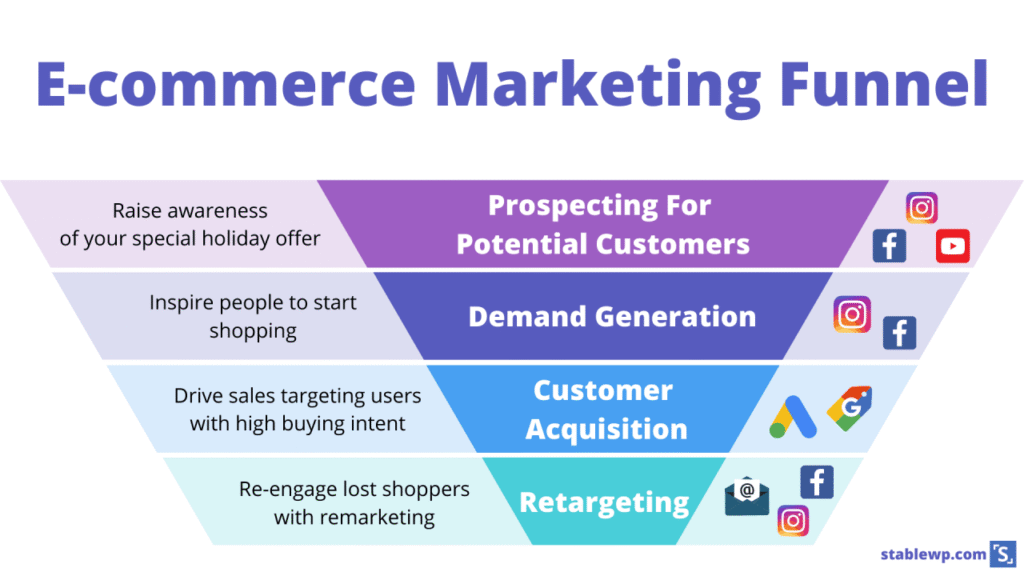
Marketing plays a crucial role in the success of any E-commerce business. In 2025, the competition in the E-commerce industry is higher than ever, and only brands with the right marketing strategies can attract customers, increase sales, and build strong online visibility. Effective E-commerce marketing helps businesses reach the right audience, improve brand awareness, and turn visitors into loyal customers. Below are the most powerful E-commerce marketing strategies explained in detail:
1. SEO (Search Engine Optimization)
SEO is the foundation of E-commerce marketing. By optimizing product pages, meta tags, URLs, and website content, your E-commerce store can rank higher on Google. Higher rankings mean more traffic, more clicks, and more conversions. Using keywords naturally in descriptions, blogs, and category pages boosts long-term visibility.
2. Social Media Marketing
Social media platforms like Instagram, Facebook, YouTube, and Pinterest are essential for E-commerce growth. Posting creative content, running ads, and showing behind-the-scenes clips can attract users and increase brand engagement. Many E-commerce brands also use influencer marketing to reach targeted audiences quickly.
3. Paid Advertising (Google Ads & Meta Ads)
Paid ads help E-commerce businesses appear instantly in front of interested users. Google Ads bring search-based buyers, while Meta Ads (Facebook + Instagram) help with audience targeting and retargeting. Paid ads boost traffic, sales, and brand reach within days.
4. Email & SMS Marketing
Email marketing remains one of the most effective tools for E-commerce. Sending newsletters, product updates, offers, and abandoned cart reminders helps re-engage customers. SMS campaigns deliver quick updates and flash sale alerts, increasing conversions.
5. Content Marketing
Blogs, buying guides, product comparisons, and how-to articles help E-commerce stores attract organic traffic. Content builds trust, educates customers, and improves search engine ranking, making it an essential E-commerce strategy.
6. Influencer & Affiliate Marketing
Partnering with influencers helps E-commerce brands gain credibility and reach new audiences. Affiliate programs encourage creators to promote products in exchange for commission, boosting sales without upfront cost.
7. Retargeting Campaigns
Retargeting ads remind customers of products they viewed but didn’t buy. This strategy is highly effective for E-commerce because most visitors do not purchase on their first visit. Retargeting increases return traffic and boosts sales significantly.
8. Customer Loyalty Programs
Rewarding customers with points, discounts, and special offers helps increase repeat purchases. Loyalty systems are essential for long-term E-commerce success and customer retention.
9. Personalized Marketing
Using AI and customer data, E-commerce platforms can show personalized product recommendations and offers. Personalized marketing increases conversions, improves customer satisfaction, and makes the shopping experience unique.
10. User-Generated Content (UGC)
Photos, videos, and reviews shared by real customers build instant trust. UGC helps E-commerce brands attract new buyers and convert them faster because customers trust real experiences more than advertisements.
11. Optimized Product Listings
High-quality images, detailed descriptions, clear titles, and keyword-rich content improve product visibility. Strong listings are essential for increasing conversion rates on every E-commerce website.
With the right combination of SEO, content, paid ads, and personalized marketing, any E-commerce business can grow rapidly in 2025. Strong marketing strategies help you stand out, attract more customers, and boost long-term sales.
8. Future of E-Commerce
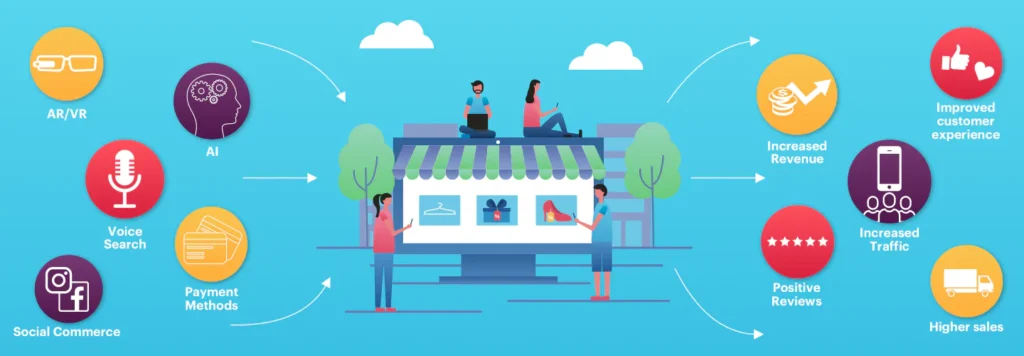
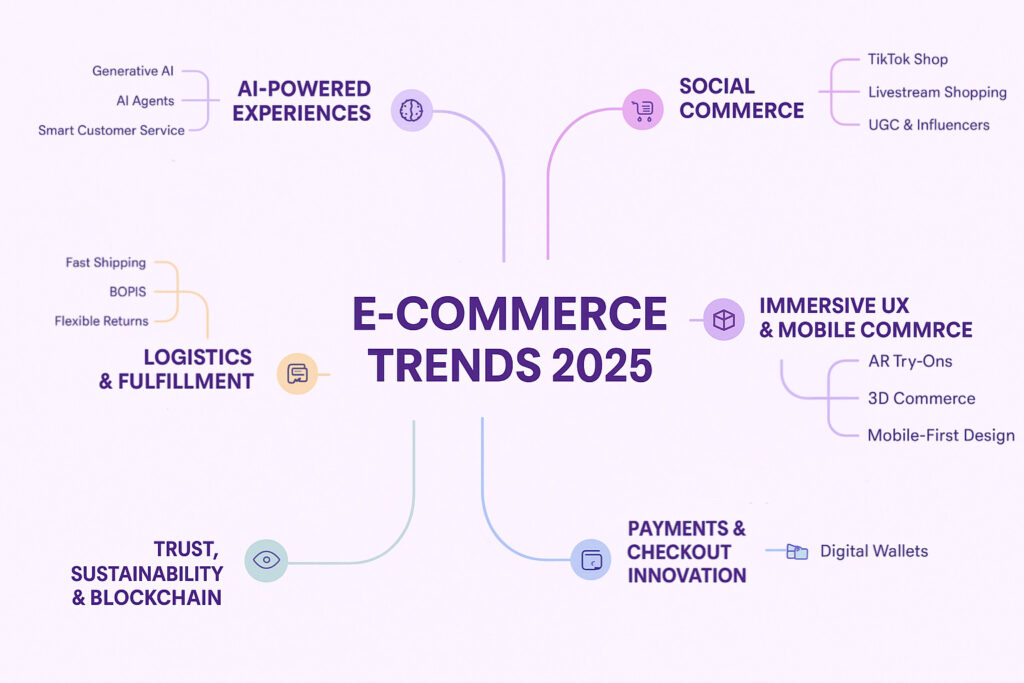
The future of E-commerce in 2025 and beyond is more advanced, personalized, and technology-driven than ever before. As digital innovation grows at lightning speed, E-commerce is moving toward a smarter, faster, and more immersive shopping experience. Businesses that embrace these future trends will not only survive but thrive in the global digital marketplace.
1. Artificial Intelligence (AI) & Automation
AI is transforming E-commerce by automating customer support, product recommendations, and marketing. AI-powered chatbots, personalized product suggestions, and demand forecasting make E-commerce more efficient, accurate, and customer-friendly. Automation reduces errors, speeds up processes, and improves the overall buying experience.
2. Augmented Reality (AR) Shopping
AR will become a major part of future E-commerce. Customers can virtually try products—like makeup, furniture, clothing, or home décor—before buying. This improves confidence, reduces returns, and creates a more interactive shopping environment.
3. Faster & Smarter Deliveries
Delivery speed is becoming a deciding factor in E-commerce. With drone delivery, automated warehouses, and real-time tracking, customers will receive products faster. Same-day and even 2-hour deliveries will become common in many cities.
4. Voice Commerce
Voice assistants like Alexa, Google Assistant, and Siri are changing how users shop. Voice-based E-commerce allows customers to order products simply by speaking. This trend will grow rapidly as voice technology becomes more accurate and widely used.
5. Hyper-Personalization
Future E-commerce will be deeply personalized. Every customer will see products, offers, and recommendations tailored to their behavior, interests, and purchase history. This level of personalization increases conversions and strengthens customer loyalty.
6. Sustainable & Eco-Friendly E-Commerce
Customers are becoming environmentally conscious. Eco-friendly packaging, carbon-neutral shipping, and sustainable brands will become essential in E-commerce. Businesses that adopt green practices will gain a competitive advantage.
7. Social Commerce Expansion
Social media platforms are turning into full E-commerce hubs. Instagram Shops, Facebook Marketplace, YouTube Shopping, and TikTok Shop allow users to buy products without leaving the app. This trend will grow massively in 2025 and beyond.
8. Blockchain & Secure Payments
Blockchain technology is improving transparency and security in E-commerce. Secure payments, verified sellers, and digital ownership are becoming part of future E-commerce platforms. This builds trust and reduces online fraud.
9. Subscription-Based Models
Subscription E-commerce is growing fast—whether it’s beauty boxes, meal kits, online learning, or lifestyle products. These models offer convenience and predictable income for brands.
10. Global E-Commerce Expansion
Borders are disappearing in the digital world. Future E-commerce will enable even small businesses to sell internationally with ease. Global shipping, multi-language support, and digital payments will make worldwide selling simple and accessible.
The future of E-commerce promises more innovation, more convenience, and more opportunities for businesses and customers. Those who adopt new technologies early will lead the next generation of online business success.
9. Conclusion
E-commerce has become the heart of modern business success in 2025. From small startups to global brands, every business relies on E-commerce to reach more customers, increase sales, and build a strong online presence. With rapid growth in digital payments, mobile shopping, automation, and advanced technologies like AI and AR, E-commerce continues to evolve into a smarter, faster, and more customer-focused industry.
The importance of E-commerce lies in its ability to provide convenience, affordability, and global reach—all from a single online platform. Businesses can operate 24/7, reduce operational costs, and use powerful marketing tools to boost visibility and conversions. Whether it’s personalized recommendations, secure payment systems, fast delivery options, or seamless user experience, E-commerce delivers everything customers expect in today’s digital world.
As technology keeps advancing, the future of E-commerce will bring even more opportunities. Brands that adapt quickly, innovate consistently, and invest in digital strategies will stay ahead of competitors and achieve long-term success.
If you want expert guidance, professional digital solutions, or help growing your E-commerce business, ,KBDigitalFly.com is the right partner to support your journey.
10. FAQs
1. What is E-commerce?
E-commerce is buying and selling products or services online.
2. Why is E-commerce important?
It allows businesses to reach customers globally and increase sales.
3. How does E-commerce work?
Products are displayed online, customers order, pay digitally, and receive delivery.
4. What are the types of E-commerce?
B2C, B2B, C2C, C2B, D2C, subscription-based, and hybrid models.
5. What are the benefits of E-commerce?
24/7 availability, lower costs, global reach, faster buying, and marketing insights.
6. Do small businesses need E-commerce?
Yes, it helps small businesses grow faster and reach more customers.
7. How to start an E-commerce business?
Choose products, build a website, add secure payment methods, and market online.
8. What is a B2C E-commerce model?
Business sells products directly to consumers online.
9. What is a B2B E-commerce model?
Business sells products or services to other businesses online.
10. What is a D2C E-commerce model?
Brands sell directly to customers without middlemen.
11. How to make an E-commerce website secure?
Use SSL certificates, secure payment gateways, and encrypted customer data.
12. What features are essential for an E-commerce website?
Fast loading, mobile-friendly, secure checkout, multiple payments, and easy navigation.
13. How can E-commerce marketing help my business?
SEO, social media, email, paid ads, and personalized campaigns increase traffic and sales.
14. What is the role of AI in E-commerce?
AI helps with personalized recommendations, chatbots, and automated processes.
15. What is social commerce?
Selling products directly through social media platforms like Instagram or TikTok.
16. Can E-commerce work internationally?
Yes, E-commerce allows global shipping, multi-language support, and digital payments.
17. How to increase sales in E-commerce?
Use SEO, paid ads, retargeting, loyalty programs, and personalized offers.
18. What is subscription-based E-commerce?
Selling products or services on a recurring monthly or yearly basis.
19. How does E-commerce improve customer experience?
Through fast delivery, secure payments, reviews, product details, and smooth navigation.
20. Who can help me grow my E-commerce business?
Professional digital partners like KBDigitalFly provide E-commerce solutions and marketing support.
Related Articles


2 Comments
Leave a comment
Recent Posts

October 12, 2026
Google Ads Qualified Leads

September 26, 2026
Google AI Overviews

September 25, 2026
A point that stands out here is user trust. Platforms like https://oxymedpharm.com� show how clear information, organization, and professionalism can improve engagement in online business models, especially in regulated industries like healthcare.
Good post and right to the point. I am not sure if this is in fact the best place to ask but do you people have any ideea where to get some professional writers? Thanks 🙂